Condo vs Townhome In Castro Valley: How To Choose
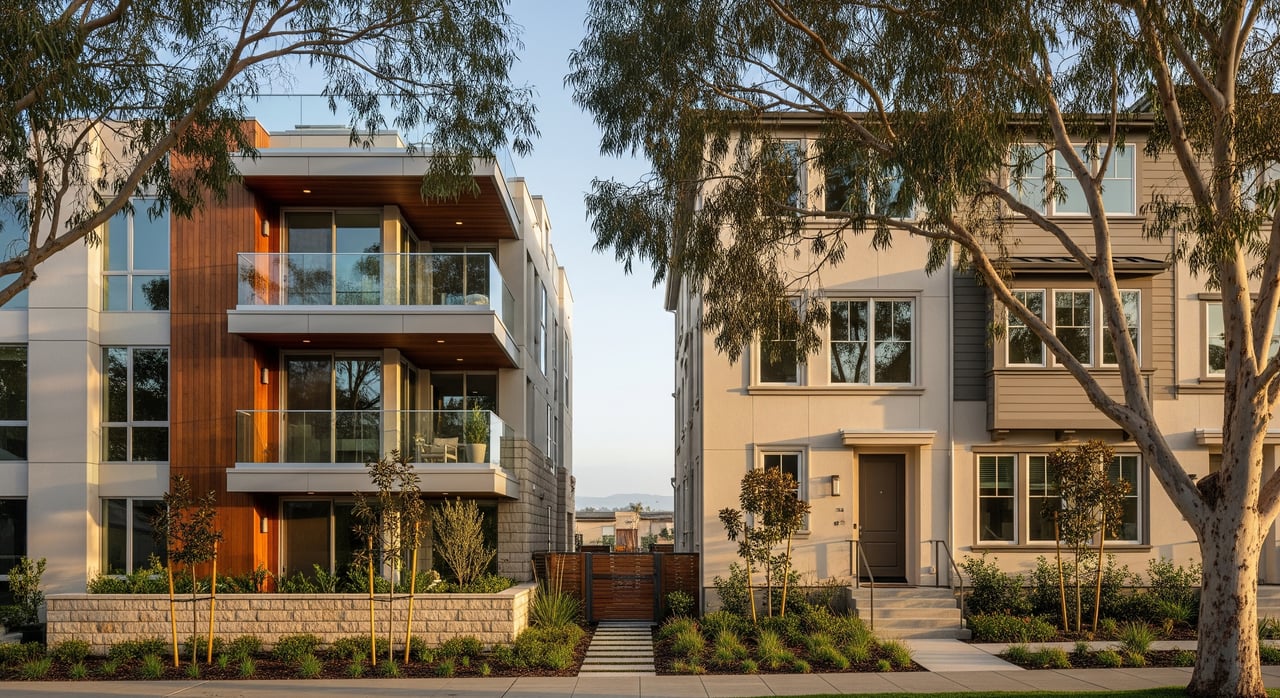
Stuck between a condo and a townhome in Castro Valley? You are not alone. Both options can offer a smart, lower‑maintenance path into the East Bay market, yet the details around ownership, HOA rules, costs, and resale can feel confusing. In this guide, you will learn the key differences, what to expect in Castro Valley, and a step‑by‑step checklist to choose with confidence. Let’s dive in.
In California, “condo” and “townhome” describe both a building style and a legal form of ownership. A typical condominium means you own the interior of your unit plus a shared interest in common areas. A townhome can be set up the same way or as fee‑simple ownership where you own the land and the entire structure. The legal form drives insurance, maintenance, rules, and lending, so always confirm the setup in the title and CC&Rs.
Most condos and many townhomes are part of a homeowners association governed by the Davis‑Stirling Common Interest Development Act. The HOA enforces the CC&Rs, collects assessments, and maintains common elements. Rules may cover rentals, pets, exterior changes, and parking. You should receive governing documents and financial disclosures before you buy, including budgets, reserve studies, and any litigation notices.
With condos, the HOA usually takes care of the exterior, roof, shared systems, and common spaces. You are typically responsible for the interior finishes and sometimes interior systems. With fee‑simple townhomes, you often handle the exterior and roof, while any HOA focuses on shared areas like landscaping or driveways. Always check the CC&Rs to see who pays for what.
HOA fees fund common area upkeep, insurance for shared spaces, and reserves for big repairs. In the Bay Area, fees vary widely and often land in the low hundreds to several hundreds per month, depending on age and amenities. Special assessments can happen if reserves fall short, so review the reserve study, recent meeting minutes, and assessment history to gauge risk.
California property taxes are based on Proposition 13. Expect a base tax around 1 percent of assessed value, plus any voter‑approved local assessments. Check with the Alameda County Assessor and Treasurer for parcel‑specific amounts and any local charges that may apply.
Lenders look closely at common interest projects. Some condo projects face limits if there is a high share of investor ownership, commercial space, delinquencies, or low reserves. FHA and VA have project approval rules and published criteria. If a project is not approved, FHA or VA financing can be difficult. Fee‑simple townhomes often underwrite more like single‑family homes, though shared walls and any HOA still matter.
Condo owners usually rely on the HOA’s master policy for common areas and some building coverage, paired with an HO‑6 policy for interior improvements, personal property, liability, and loss assessment coverage. Fee‑simple townhome owners often insure the entire structure themselves, while the HOA may only cover shared spaces. Confirm master policy limits and deductibles, and match your personal policy to the actual responsibility laid out in the CC&Rs.
Standard homeowners and HO‑6 policies do not cover earthquake or flood. Earthquake risk in the East Bay, including Castro Valley, is significant. Consider separate earthquake coverage and review FEMA flood maps for flood zone status before you buy.
Condos and townhomes can reduce your hands‑on maintenance. Many communities offer amenities like landscaped grounds or pools. In return, you accept HOA rules that may limit certain renovations, rentals, or exterior changes. Shared walls can also mean more noise than a detached home. If lower upkeep matters to you, attached living can be a good fit.
Townhomes more often include attached garages and small private yards. Condo parking varies widely, from deeded spaces to assigned spots and guest parking rules. Confirm what you get and what is recorded on title. If you rely on storage or need EV charging, verify what is allowed and who pays for upgrades.
Financing access strongly impacts your buyer pool. Conventional buyers may be more flexible than FHA or VA buyers if a project lacks approval. The HOA’s financial health and reputation also matter for resale value. Well‑funded reserves and clear maintenance plans tend to boost buyer confidence. Compare sales within the same ownership type so you do not overvalue or undervalue your home.
Castro Valley’s proximity to the BART station and major corridors like I‑580 and I‑880 is a draw for many buyers. If quick access is a priority, compare different developments by commute time and transit convenience. Attached housing often offers an easier lock‑and‑leave lifestyle for commuters.
Castro Valley is in unincorporated Alameda County. That means county rules often apply for permits and repairs. Before you plan exterior work on a townhome, confirm what the CC&Rs allow and what the county requires. Utility and local assessment details appear on property tax bills, so review them before you commit.
The East Bay has notable earthquake risk. This can affect insurance choices and emergency planning. Review USGS resources for regional hazard context and check FEMA flood maps to see if the property lies in a flood zone. These items can influence your cost of ownership and your comfort level over the long term.
Use these guiding questions to narrow your fit:
Work through these steps for any unit you are considering:
In Castro Valley, the condo versus townhome decision hinges on your preferred level of control, maintenance, and financing path. The legal form of ownership affects your costs, your rules, and your insurance. When you confirm those details up front and pair them with a careful review of HOA health and local factors, you make a smart, confident choice for your lifestyle.
If you want a local, step‑by‑step plan to compare options or prep your sale, reach out to the team at Refined Real Estate. We will help you weigh the tradeoffs, read the HOA documents, and move forward with clarity.

Refined Real Estate intends to make your next home purchase or sale successful and stress-free. Regardless of your goals, our team is committed to guiding you through the home buying and selling processes with honesty, integrity, and clarity.
We’re expert communicators, negotiators, and marketers, but above all, we’re down-to-earth professionals. As Bay Area natives and Central Valley residents, we know the ins and outs of every neighborhood, county, and district as only locals can. Leveraging our expert knowledge, expansive network, and the latest industry technology, we get desirable results for you every time. With many of our new clients coming from referrals and our past clients continuing to utilize our services, our results speak for themselves.
Our Tri-Valley and Mountain House Realtors work to cultivate a lifelong business relationship with you, so we ensure you know that our service goes beyond the transaction. Your calls and emails will never go unanswered, and we’ll never overpromise or underdeliver.
Stay up to date on the latest real estate trends.

Discover where local families go for trick-or-treating, Halloween decorations, full-size candy bars and community events in Mountain House.
The Refined Real Estate team offers unparalleled expertise to the Mountain House market, with 58 years of combined experience and over $250 million in sales. As true Mountain House real estate experts, we pride ourselves on a deep understanding of the local community and market trends. Our proven track record reflects our dedication to helping clients find not just a house, but a home. When you work with us, you’re choosing a team committed to your success and satisfaction every step of the way.