Fremont's New Construction Comes With A Second Price Tag Nobody Mentions Until You're Under Contract
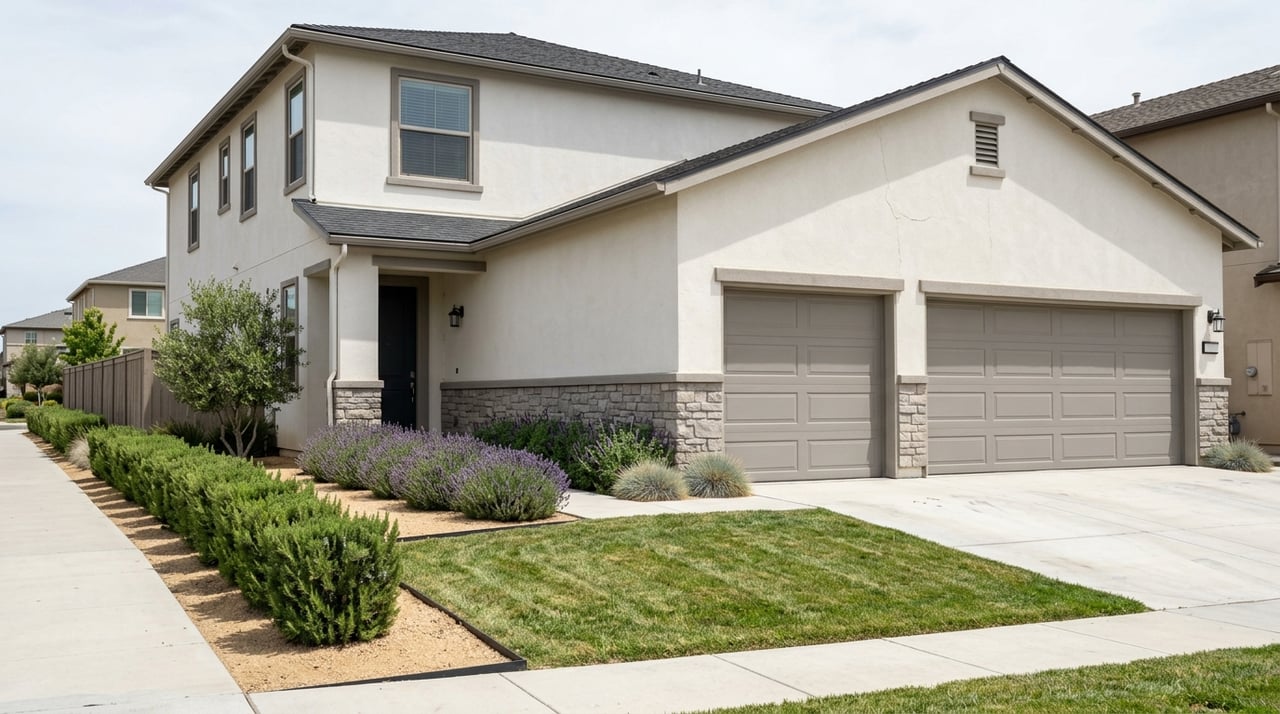
Ask anyone who has gone through escrow on a new build in Fremont's Warm Springs or Ardenwood corridor, and the same complaint comes up eventually. The sale price on the builder's website was the number they budgeted around. The number that showed up on the preliminary title report a few weeks later was not.
That second number has a name: Mello-Roos. It is a special tax tied to a Community Facilities District, and in Fremont's newer neighborhoods it is close to unavoidable. The problem is not that the tax exists. Sellers are required to disclose it under California law. The problem is when buyers actually see the figure in writing, which is often after they have already fallen for the floor plan and started waiving contingencies.
The scale of new construction behind this in Fremont is not incidental. In the Ardenwood area near Paseo Padre Parkway, KB Home built out the Patterson Ranch master plan on what was reported at the time as Silicon Valley's largest blank-slate site for single-family homes. The project grew into four distinct communities under one master plan: Magnolia, Windrose, Laurel, and North Grove. Windrose sold out entirely. Hundreds of homes on what had been agricultural land is exactly the scale of development that needs a Community Facilities District to pay for the streets and infrastructure a project that size requires.
Proposition 13 caps California property taxes at 1 percent of a home's assessed value and limits annual increases to 2 percent. That protection is popular with existing homeowners, but it leaves cities with a real funding problem when they approve a new neighborhood. A freshly built subdivision needs streets, sewer lines, and sometimes parks and schools, and the base 1 percent tax on those new homes will not generate enough revenue to cover the up-front infrastructure bill.
The Mello-Roos Community Facilities Act of 1982 gave cities a workaround. A city can form a Community Facilities District, sell bonds to pay for the infrastructure immediately, and then levy a special tax on the properties inside that district to pay the bonds back over time. It is not a tax on your home's value. It is closer to an assessment tied to the parcel itself, and it sits outside the Prop 13 cap.
Fremont has used this tool directly in the Warm Springs district. The city's own financial reports show CFD No. 2, known as Warm Springs Public Facilities, covering a 39-acre area near the Warm Springs/South Fremont BART station that was expected to include roughly 958 for-sale units once built out. The city issued $16,575,000 in bonds to fund street improvements for that district, and the special tax on the parcels inside it is what pays that bond down. It is a specific, traceable transaction, not an abstract fee.
Local Fremont-focused sources put the typical range for these charges at roughly $500 to $3,000 or more per year in Warm Springs and Ardenwood developments, on top of the standard property tax bill. Nationally, mortgage industry data on Mello-Roos points to a wider range, sometimes $1,200 to $6,000 annually in active CFD communities, with a note that in CFD-heavy areas the effective property tax rate, base plus special assessments, can land between 1.5 and 1.7 percent of the purchase price rather than the 1.1 to 1.3 percent typical of non-CFD neighborhoods. The spread between those figures is wide enough that no buyer should assume a number without checking the actual parcel.
Here is what that spread looks like in practice on two Fremont homes priced the same:
New construction, Warm Springs (with CFD) | Resale, older Fremont tract (no CFD) | |
|---|---|---|
Purchase price | $1,400,000 | $1,400,000 |
Base property tax (1.1%–1.25%) | ~$1,283–$1,458/mo | ~$1,283–$1,458/mo |
Mello-Roos / CFD | +$42–$250/mo (based on $500–$3,000/yr) | $0 |
Bond term remaining | Typically 20–40 years from issuance | N/A |
That range, $42 to $250 a month, does not sound dramatic on its own. Stretched across a 30-year mortgage, and compounded by the fact that most CFD special taxes carry a built-in annual escalation clause, it becomes a real difference in what two otherwise identical monthly payments actually cost. It also will not go away when rates drop or when you refinance. The tax is tied to the bond, not the loan.
The harder issue is not the dollar amount. It is when buyers find out.
Mello-Roos disclosure is a legal requirement in California, but it does not always show up clearly on a listing sheet or in early marketing conversations. The number that matters, the actual current annual charge and how many years remain on the bond, typically shows up on the preliminary title report your title company produces during escrow. In the newer master-planned corridors across the Bay Area, that pattern repeats often enough to be a known risk: a home pencils out on the listed price, the offer gets accepted, and only once the title report arrives does a several-thousand-dollar annual charge appear that was never part of the original math. By that point, the buyer's contingency window may already be closing.
This is not a reason to avoid new construction in Fremont. It is a reason to move the disclosure step earlier in your process instead of leaving it for escrow.
New construction near Fremont's Irvington district often gets marketed with a specific selling point: proximity to a future BART station. Listings for newer townhome communities near the Irvington Five Corners have pointed to the "future Irvington BART station" as a nearby amenity. It is a real project, but the timeline is worth putting next to the pitch.
The Irvington infill station has been discussed since the 1970s and formally approved by the BART board in 2019, with a planned location at Washington Boulevard and Osgood Road, roughly midway between the existing Fremont and Warm Springs stations. As of Fremont's own public works project page, construction could start as early as mid-2026, with the station opening in late 2031. The Alameda County Transportation Commission has allocated $120 million toward the project through Measure BB, but BART's cost estimate for the station was $282 million as of 2021, leaving a real funding gap. That gap became public news again in January 2026, when a state senator representing Fremont publicly pressed BART to pursue state funding for the project, calling out the agency for treating a station with completed environmental review and most of its needed properties already acquired as a lower priority.
None of that means the station will not get built. It means a buyer paying a premium today for proximity to a station that does not yet have full funding is pricing in an amenity that is, at best, five years out and, at worst, still searching for its last hundred million dollars.
By contrast, the Warm Springs/South Fremont BART station is not a future promise. It opened for revenue service in March 2017 and has been running for nearly a decade. If BART access is genuinely part of your decision, that distinction between a station that exists and one that is still fundraising is worth more than any brochure language.
Does Mello-Roos ever go away? Yes, once the bond that funds it is paid off. Most CFD bonds run 20 to 40 years from the date the district was formed, and the special tax expires when the bonds are retired. The remaining term depends on when your specific CFD was created, which is why checking the Rate and Method of Apportionment document for your parcel matters more than a general estimate.
Is Mello-Roos tax deductible? Generally not the portion that funds new construction. A portion tied to ongoing maintenance or services may qualify for a partial deduction in some cases, but the burden is on the taxpayer to document it, and many California homeowners have already reached federal deduction limits through base property tax and state income tax alone. Speak with a tax professional about your specific situation before assuming either way.
Where do older Fremont neighborhoods stand on this? Established areas like Niles and Centerville were largely built out before CFDs became common financing tools in the region, so resale homes there typically carry no Mello-Roos charge at all. That is one more reason a side-by-side comparison of new versus resale should include the tax line, not just the sale price. For buyers who'd rather add space to one of those resale homes instead of paying a CFD premium on new construction, it's worth understanding Fremont's ADU rules as an alternative path to more square footage.
If you are weighing a new build in Warm Springs or Ardenwood against a resale elsewhere in Fremont, the sale price is the easy part of the comparison. The parcel-level tax picture takes more digging, and getting it wrong costs real money every year you own the home. Refined Real Estate works through that math with buyers before an offer goes in, not after. Whether you're browsing current Fremont real estate listings or just want a feel for what a season here actually looks like beyond the spreadsheets, Fremont's summer event calendar is worth a look too, and our home buying resources can walk you through the rest of the process. Reach out and we'll pull the disclosure documents together before you write anything.

Refined Real Estate intends to make your next home purchase or sale successful and stress-free. Regardless of your goals, our team is committed to guiding you through the home buying and selling processes with honesty, integrity, and clarity.
We’re expert communicators, negotiators, and marketers, but above all, we’re down-to-earth professionals. As Bay Area natives and Central Valley residents, we know the ins and outs of every neighborhood, county, and district as only locals can. Leveraging our expert knowledge, expansive network, and the latest industry technology, we get desirable results for you every time. With many of our new clients coming from referrals and our past clients continuing to utilize our services, our results speak for themselves.
Our Tri-Valley and Mountain House Realtors work to cultivate a lifelong business relationship with you, so we ensure you know that our service goes beyond the transaction. Your calls and emails will never go unanswered, and we’ll never overpromise or underdeliver.
Stay up to date on the latest real estate trends.
The Refined Real Estate team offers unparalleled expertise to the Mountain House market, with 58 years of combined experience and over $250 million in sales. As true Mountain House real estate experts, we pride ourselves on a deep understanding of the local community and market trends. Our proven track record reflects our dedication to helping clients find not just a house, but a home. When you work with us, you’re choosing a team committed to your success and satisfaction every step of the way.