Living Near Dublin BART: Convenience And Tradeoffs
If you want BART access in Dublin, the big question is not just how close you are to a station. It is also what kind of daily life you want around you. Some buyers want a short trip to the platform, while others care just as much about walkable errands, parking, or a quieter block. This guide will help you understand what living near Dublin BART really feels like, where the convenience is strongest, and which tradeoffs matter most before you make a move. Let’s dive in.
Dublin is served by two BART stations: Dublin/Pleasanton and West Dublin/Pleasanton. While both give you rail access, they serve slightly different day-to-day experiences.
Dublin/Pleasanton functions more like a regional commuter hub. It is an end-of-the-line station, so many riders arrive by car, use parking, or connect by regional bus. That makes it very useful for commuting, but it does not feel like a classic urban train district.
West Dublin/Pleasanton connects more closely with Downtown Dublin’s shopping, dining, and housing core. If you picture being able to mix transit access with nearby errands and a more walkable routine, this area better fits that expectation.
The simplest way to describe living near Dublin BART is this: transit-friendly suburban living. You get the benefit of rail access, but the overall setting still feels suburban rather than fully urban.
That distinction matters when you start comparing Dublin with denser parts of the Bay Area. Near the stations, you will find newer housing, mixed-use development, and improving pedestrian connections, but you will also still see the influence of parking lots, major roads, and commuter traffic.
For many buyers, that is actually the appeal. You can stay in a more suburban environment while still gaining access to a regional transit system.
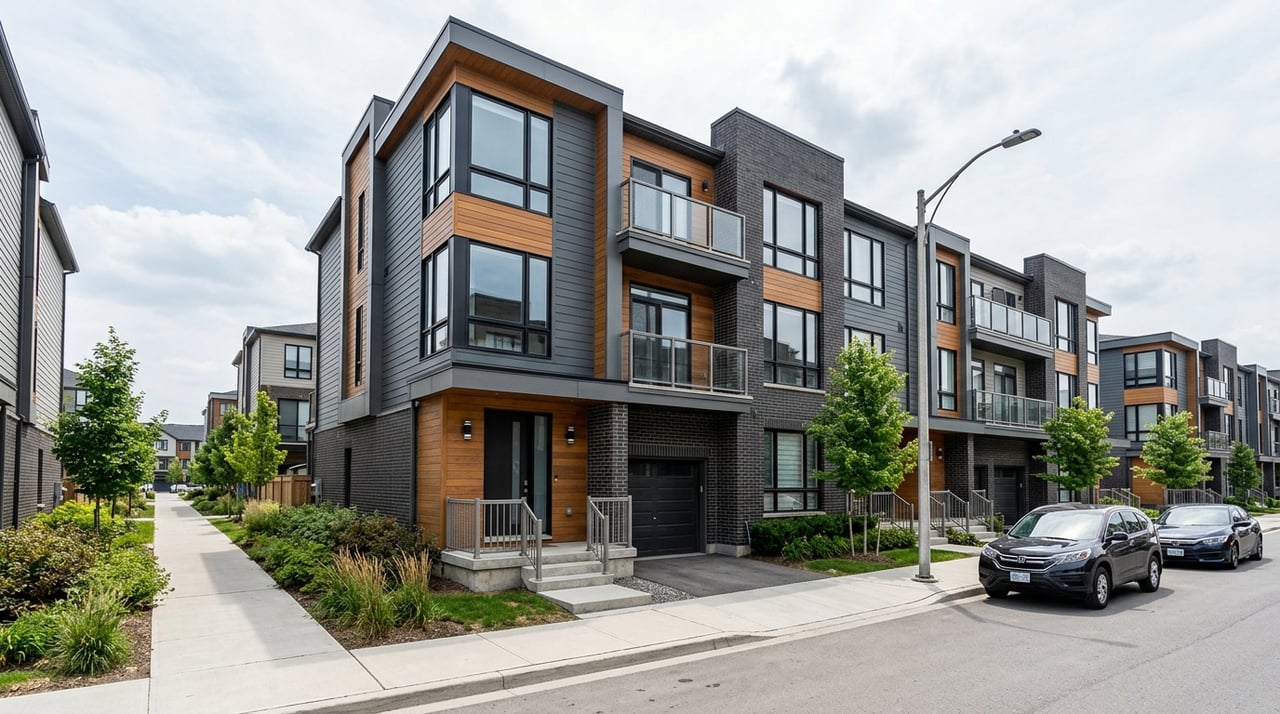
If you want to live close to BART in Dublin, the housing mix changes depending on how close you are to the station core. Near the stations, especially around Downtown Dublin and West Dublin/Pleasanton, the market leans heavily toward apartments and mixed-use communities.
The city’s rental and planning materials point to communities such as 5421 at Dublin Station, Aster, Avalon Dublin Station, Avoca Dublin Station, Dublin Station by Windsor, Camellia Place, Tralee Village, Valor Crossing, Connolly Station, and Avalon West Dublin. This pattern reflects how the area has grown around transit-oriented development.
As you move farther from the BART core, the housing stock becomes more suburban. Townhomes and single-family homes become more common, especially in areas shaped by the broader Eastern Dublin plan.
If your goal is to combine BART access with nearby restaurants, shops, and services, West Dublin stands out. Downtown Dublin and nearby retail corridors are clustered closer to this side of the city, and the area is being reshaped into a more pedestrian-oriented mixed-use district.
The city specifically notes that higher-density projects are taking shape because of BART, with developments like Aster and Connolly Station helping support more dining, shopping, and recreation nearby. If you want a more connected daily routine, this part of Dublin offers the strongest case.
Dublin/Pleasanton is highly practical, but it serves a different purpose. BART identifies it as an end-of-the-line station, and the station area is shaped by that role.
You will likely notice more emphasis on parking, driving access, and regional connections. If your priority is getting on BART efficiently and heading out, this setup can work well. If you want a neighborhood that feels centered on walking to coffee, groceries, and dinner, it may feel less intuitive.
The answer depends on which part of Dublin you choose. Your best odds are in the West Dublin and Downtown core, where housing, retail, and trail connections are more concentrated.
Even there, it is more accurate to think of Dublin as car-light friendly for some households rather than fully car-free for everyone. Walkability is improving, but the city still functions like a suburb in many ways.
In outer neighborhoods, a car is likely to remain part of daily life. The farther you move from the station core, the more the housing pattern shifts toward traditional suburban development.
Living near BART is not only about the train. It is also about what you can do nearby without adding another drive to your day.
Downtown Dublin and nearby corridors include shopping and dining areas such as Dublin Place, Dublin Retail Center, Shamrock Village, Village Parkway, Village Square and Valley Plaza, and Amador Plaza Road. The city also highlights larger retail and restaurant destinations like Hacienda Crossings, Persimmon Place, Grafton Station, Waterford, Fallon Gateway, and Tivoli Plaza.
That means convenience is real, but it is spread across a suburban layout rather than packed into a tight city grid. Some errands may be walkable if you choose your location carefully. Others may still be easier by car.
One of the more important trends near Dublin BART is that walkability is getting better. The city is actively working toward stronger pedestrian and bicycle connections in the station area.
A recent example is the Iron Horse Trail bridge at Dublin Boulevard, which opened on November 23, 2024. City and BART efforts also include better wayfinding, lighting, safer bike and pedestrian separation, and more secure bicycle parking.
That does not mean every block feels fully built out for pedestrians today. It does mean buyers looking at the area now should view walkability as an improving feature, especially near Downtown Dublin and BART-connected routes.
Parking is one of the clearest tradeoffs of living near Dublin BART. The convenience of being near transit is real, but you should not assume parking will work the same way it does in older suburban neighborhoods.
BART lists daily parking at Dublin/Pleasanton at $3.40, single-day or multi-day reserved parking at $5, and monthly reserved parking at $93.80. BART also notes that the large Dublin-side surface lot is privately operated.
At the same time, Dublin has eliminated parking requirements in parts of Downtown Dublin, the transit-oriented district, and Village Parkway, extending that approach beyond the state-required half-mile radius around the station. For buyers and renters, that is an important signal that newer station-area living may come with tighter parking expectations.
Another factor to think about is noise. Downtown Dublin sits near Dublin Boulevard, I-580, and I-680, and the city describes Dublin Boulevard as a heavily traveled east-west roadway.
Environmental review materials for the area identify traffic on I-580, I-680, and Dublin Boulevard as the primary noise sources. In that context, BART-station noise is generally masked by freeway traffic noise.
The practical takeaway is simple. If you are close to the freeway or along the busiest corridors, the area is more likely to feel active and noisy. Interior residential blocks are more likely to feel calmer.
Living near Dublin BART tends to work well for a few specific types of buyers and renters. If you see yourself in one of these groups, the area may be a strong fit.
It may be less ideal if your top priorities are abundant free parking, a very quiet setting near every home option, or a fully car-free routine across all errands.
Before you buy or rent near Dublin BART, try to answer a few practical questions based on your actual routine.
These questions can quickly narrow down whether West Dublin, Downtown Dublin, or a more suburban pocket farther out makes the most sense for you.
Living near Dublin BART offers a strong blend of commute convenience and suburban comfort, but it comes with tradeoffs you should understand upfront. The biggest upside is easy regional transit access paired with a downtown area that is becoming more walkable and mixed-use over time.
The tradeoffs are mostly practical. Parking is not always simple or free, traffic influences daily life, and the areas closest to major roads can feel busier or louder.
If you go in with clear expectations, Dublin can be a very smart choice. The key is choosing the station area and housing type that best match how you actually live.
If you are thinking about buying near Dublin BART and want help narrowing down the right part of town, Refined Real Estate can help you compare location, housing type, and commute tradeoffs with a local, practical lens.

Refined Real Estate intends to make your next home purchase or sale successful and stress-free. Regardless of your goals, our team is committed to guiding you through the home buying and selling processes with honesty, integrity, and clarity.
We’re expert communicators, negotiators, and marketers, but above all, we’re down-to-earth professionals. As Bay Area natives and Central Valley residents, we know the ins and outs of every neighborhood, county, and district as only locals can. Leveraging our expert knowledge, expansive network, and the latest industry technology, we get desirable results for you every time. With many of our new clients coming from referrals and our past clients continuing to utilize our services, our results speak for themselves.
Our Tri-Valley and Mountain House Realtors work to cultivate a lifelong business relationship with you, so we ensure you know that our service goes beyond the transaction. Your calls and emails will never go unanswered, and we’ll never overpromise or underdeliver.
Stay up to date on the latest real estate trends.
The Refined Real Estate team offers unparalleled expertise to the Mountain House market, with 58 years of combined experience and over $250 million in sales. As true Mountain House real estate experts, we pride ourselves on a deep understanding of the local community and market trends. Our proven track record reflects our dedication to helping clients find not just a house, but a home. When you work with us, you’re choosing a team committed to your success and satisfaction every step of the way.